
A mesh window is an opening, not a guarantee that a pet inside a carrier stays cool. Air must have a path through the carrier, and the surrounding air must be safe too. A dark fabric bag in direct sun can become uncomfortable even when the mesh looks generous. Compare panels, opening clearance, and room for normal posture before buying. During travel, prioritize shade, stable placement, moderate temperature, and regular observation. If a pet shows signs of heat illness or breathing difficulty, seek urgent veterinary care instead of trying to solve the problem with a different accessory. See our veterinary disclaimer.
Map the airflow path, not just the mesh area
Look at the carrier from the front, both sides, and top. Air enters and leaves through openings that need clearance after you set the bag on a seat, floor, or under a bench. A large mesh panel pressed against a wall is no longer a useful opening. Compare the actual open weave with decorative fabric panels or plastic windows. Cats Protection recommends openings on at least two sides for cat carriers. Check the maker’s guidance for other species and for any airline-specific setup. Do not interpret a product photo as evidence of tested thermal performance.
Confirm the animal can reposition freely
The carrier must allow the pet to turn and settle naturally rather than hold its nose against the mesh. Measure internal usable space with any pad installed. Observe the animal during a quiet, brief practice session and check for pressed whiskers, hunched posture, or the need to curl tightly to avoid a wall. More vents cannot compensate for a carrier that is too small. For a dog with a short muzzle or an animal with known respiratory problems, ask the veterinarian about travel suitability and minimize unnecessary heat and stress. Fit and breathing clearance work together.
Check zipper edges and window seams
Mesh that provides ventilation can also become a snag point when seams tear. Inspect each panel for holes, loose thread, detached stitching, or a zipper slider that exposes a gap. Open and close the empty carrier slowly to make sure mesh does not catch in the track. Avoid clipping toys or water bowls to weak window seams unless the maker supports those attachments. An escape-resistant carrier must balance airflow with a secure shell. Replace a bag if a pet could push its mesh out or whose closure cannot stay consistently sealed. Do not patch a structural tear with household tape.
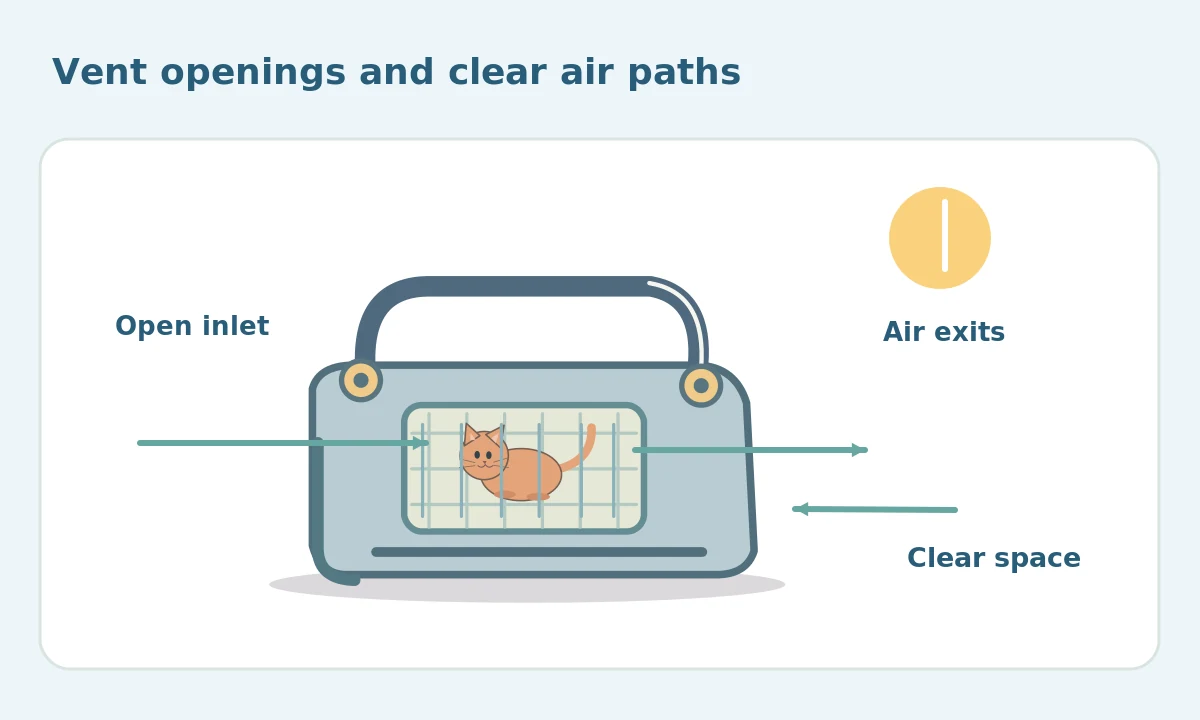
Compare exposed vents with blocked panels
In a safer setup, two or more openings face unobstructed air space and you keep the carrier in shade. In a risky setup, a towel covers all mesh panels, a bag sits in direct sunlight, or someone wedges it against luggage. Both examples might show the same product, but their airflow is very different. A light partial cover can make some cats feel less exposed, as feline welfare groups explain, but always leave adequate ventilation. Never place a carrier inside a sealed container or under a pile of coats. Check the surroundings every time you move it.
Avoid direct sun and hot parked vehicles
CDC and AVMA travel advice is clear: never leave pets alone in parked vehicles. Cracking windows does not turn a hot car into a safe waiting area. Set the cabin temperature before loading the pet and prevent direct sunlight from beating through the carrier wall. Do not assume a handheld fan, reflective cover, or cooling pad makes an overheated vehicle acceptable. Keep trips short when conditions are unfavorable and choose another time or transport plan when possible. If a veterinary visit is essential during extreme heat, call the clinic for the safest arrival arrangement.
Recognize when to stop the trip
Rapid or difficult breathing, collapse, unusual weakness, or severe agitation can be emergencies. Cats may show open-mouth breathing under serious stress or heat, and dogs may pant for several reasons; context matters. Do not diagnose heat illness from one visual cue, and never ignore a drastic change. Move to a cooler safe environment, contact emergency veterinary help, and follow the professional’s instructions. Opening a carrier outside near traffic can introduce a separate escape danger. Prioritize a secured indoor room or safely closed vehicle for any necessary transfer.

Use shade without sealing the air path
Choose a shaded route and position the bag so multiple mesh panels remain open. For a visually sensitive cat, drape a thin breathable cloth over part of a rigid carrier only when it does not obstruct necessary vents. Avoid thick blankets tightly wrapped around soft mesh carriers in warm weather. A cover must be easy to remove promptly and must not slip across the pet’s nose. Touch the exterior fabric and check surrounding air conditions instead of trusting a printed temperature claim. Do not spray water into the carrier as a substitute for safe ambient temperature.
Check warm-weather placement at rest stops
Place a carrier on a stable, level surface away from pavement heat, direct sun, and foot traffic. Keep pets secured while loading and unloading supplies. Leaving a carrier outside a shop risks fast temperature changes, theft, or interference. For car travel, follow transport safety guidance for positioning and securing the carrier, not improvising a seat belt through a flexible handle. A shaded carrier still needs supervision. Bring water for appropriate stops and seek veterinarian-specific travel advice for young, senior, ill, or heat-sensitive animals.
Clean mesh without weakening it
Brush debris from the empty carrier and follow the manufacturer’s cleaning instructions. Harsh solvents and aggressive scrubbing may degrade coated fabric, glue, or elastic edging. Rinse away permitted cleaning products and allow the carrier to dry completely. Inspect for frayed stitches, stiffened mesh, detached trim, and warped frame supports once dry. Mesh must be both breathable and mechanically intact. Avoid leaving a bag in prolonged sun for storage, because UV exposure can weaken some materials. Check the condition again before the next trip, not only after washing.
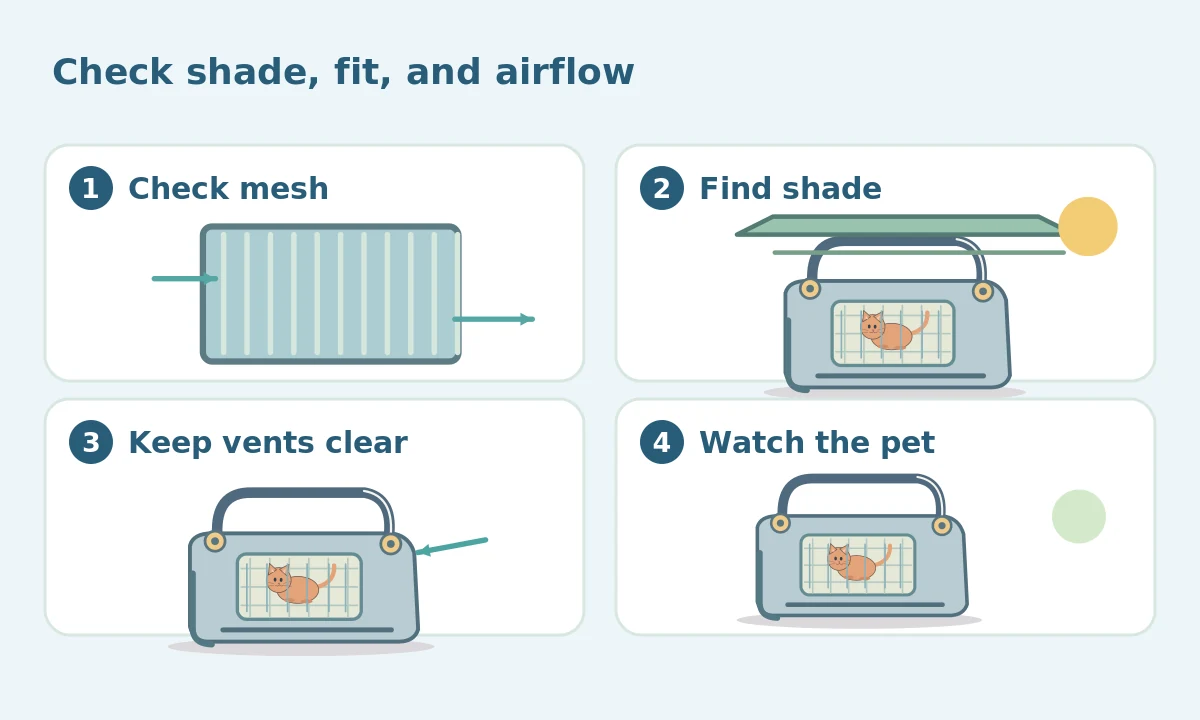
Choose the carrier for the route
A short walk to a clinic, a long drive, and a flight place different demands on ventilation and handling. Airlines can have specific carrier dimensions and ventilation rules that change, so verify directly with the carrier and airline before booking. Seek a stable, appropriately sized design with multiple open airflow paths and reliable closures. If the animal seems uncomfortable in a trial, do not make the journey longer hoping it will adapt. Comfort, temperature, and secure containment matter more than decorative mesh area or a claim such as “all-season.”
How We Research
We used veterinary association, animal welfare, and public-health guidance to separate established transport precautions from practical home inspections. Product dimensions, load limits, attachment methods, and care instructions differ, so the instructions supplied with your particular carrier take priority. HubPet did not independently crash-test, heat-test, or certify any carrier or accessory. We reviewed sources in October 2026; confirm any current airline requirements directly before travel. Learn more on our About HubPet page.
Sources
Cats Protection — How to Choose and Use a Cat Carrier (reviewed October 2026).
CDC — Pet Travel Safety (reviewed October 2026).
AVMA — Traveling With Your Dog or Cat (reviewed October 2026).
Safety note: If your pet has a health condition, breathing difficulty, injury, severe travel distress, or symptoms of overheating, contact a veterinarian. A buying or maintenance guide cannot replace individual veterinary advice.
Not by itself. Check for a clear entry and exit path for air, suitable openings on more than one side, and adequate space around the carrier.
A partial cover may reduce visual stress for some cats, but never block all ventilation, particularly in warm weather.
No. Never leave a pet unattended in a parked vehicle. A pad or fan cannot make dangerous ambient heat safe.
No. Inspect seams, panel attachment, zippers, and frame support. A torn or detachable mesh window is an escape hazard.
Seek urgent veterinary guidance, move toward a safe temperature-controlled area, and avoid opening the carrier in an unsecured outdoor space.