
A retractable dog gate rolls mesh into a side housing so the doorway stays open when the barrier is not needed. This can be convenient in tight halls, but flexible material behaves differently from a rigid gate when a dog leans, claws or charges. Marketing photos rarely show what happens under repeated pressure or at awkward mounting angles. Here is a risk-first framework for deciding whether mesh suits your dog, testing the latch and keeping the opening safe for people. Do not use a retractable gate to secure a serious fall hazard unless the exact device and installation meet applicable safety requirements. For an anxious dog, review HubPet’s veterinary disclaimer.
Understand what flexible mesh actually does
A mesh gate creates a visible boundary across a doorway while allowing the panel to retract when not needed. It is not equivalent to a steel grid fixed in place: flexible mesh may bow when pushed, permitting a pet to reach farther than expected. Some products serve mainly as visual deterrents rather than impact-resistant containment. The maker’s size or weight recommendation describes a product limit, not a promise that every energetic dog will stay behind it. Look for guidance specific to pets, and avoid assuming a gate approved for one setting can be moved to a riskier opening without changes.
Decide whether failure would be dangerous
Imagine the dog running into the closed panel. If mesh detaches, could the dog tumble down stairs, access a balcony or enter a room with exposed chemicals? Those locations demand a more secure arrangement. Consumer Reports advises against retractable safety gates at the top of stairs for protecting children. Pet-only products are not child safety gates either. A normal hallway separating two otherwise safe rooms is a different use case. If you need the gate to prevent injury rather than encourage calm access boundaries, pick a rigid alternative and secure it properly. Convenience should not outrank the consequence of a breach.
Check the dog’s habits before buying
A small, calm dog that rarely touches barriers may accept a retractable visual boundary during supervised household activity. A dog that paws, chews, scratches, lunges or bounces against gates can damage mesh or loosen brackets. Puppies may put their mouths on exposed edges; an animal that climbs can snag claws. A chew-resistant claim requires real evidence for the specific model and does not excuse supervision. If your dog has a history of frantic separation behavior, a mesh panel is not a behavioral treatment. Work on the underlying problem and use a secure room arrangement instead.
Measure mounting surface and usable width
Record both the opening width and the space available for the roll housing and receiving catch. A door casing with trim can force the housing to sit at an angle, creating slack or poor latching. Check wall studs or other permitted anchor points, not merely the paint surface. The maximum advertised span may require particular mounting hardware or tension that is hard to maintain in the real home. Follow the installation manual and do not add hooks, adhesive straps or extra mesh to extend the gate. Determine whether the fabric reaches the floor without leaving a gap that catches a paw.
Treat tension and bottom gaps as separate checks
Stretch the gate according to instructions and lock its receiving bar. Examine the panel from the dog’s side while gently checking for excessive sagging. A gap may open under the lower edge when a dog noses it, even if the top remains taut. Never test with the dog charging into the mesh. Watch for rolled or fraying edges and any loose stitching. The catch should stay engaged when the fabric is lightly touched. If a dog can wedge its head beneath or push the edge aside, the barrier cannot perform its intended role. Replace worn fabric rather than patching it with tape.
Watch the walking path when the gate is open
Retractable designs can reduce permanent obstructions, yet the housing, latch receiver and any lower strip still need clearance. People may forget the transparent or dark mesh is extended and walk into it while carrying groceries. A clearly visible edge or marker can help, provided it introduces no chewable pieces. Put the latch where people can reach it without leaning over a staircase. After retracting, ensure no loose line or flap hangs where a pet can pull it. Teach every caregiver exactly how to engage the lock; a partly stretched panel is not a closed gate.

Practice calm interaction with a new texture
Start with the barrier retracted so the dog can investigate the housing at a distance. Reward standing or resting calmly near the opening. Extend the mesh only briefly while someone supervises and the dog remains comfortable. If the dog paws at it, step back to easier practice rather than shouting or yanking the dog away. A dog who bolts toward a transparent panel may need a different, more visible rigid gate. For persistent barking, lunging or distress, switch to a safer arrangement and seek help from a reward-based trainer. Training and material choice must work together.
Maintain mesh and hardware throughout use
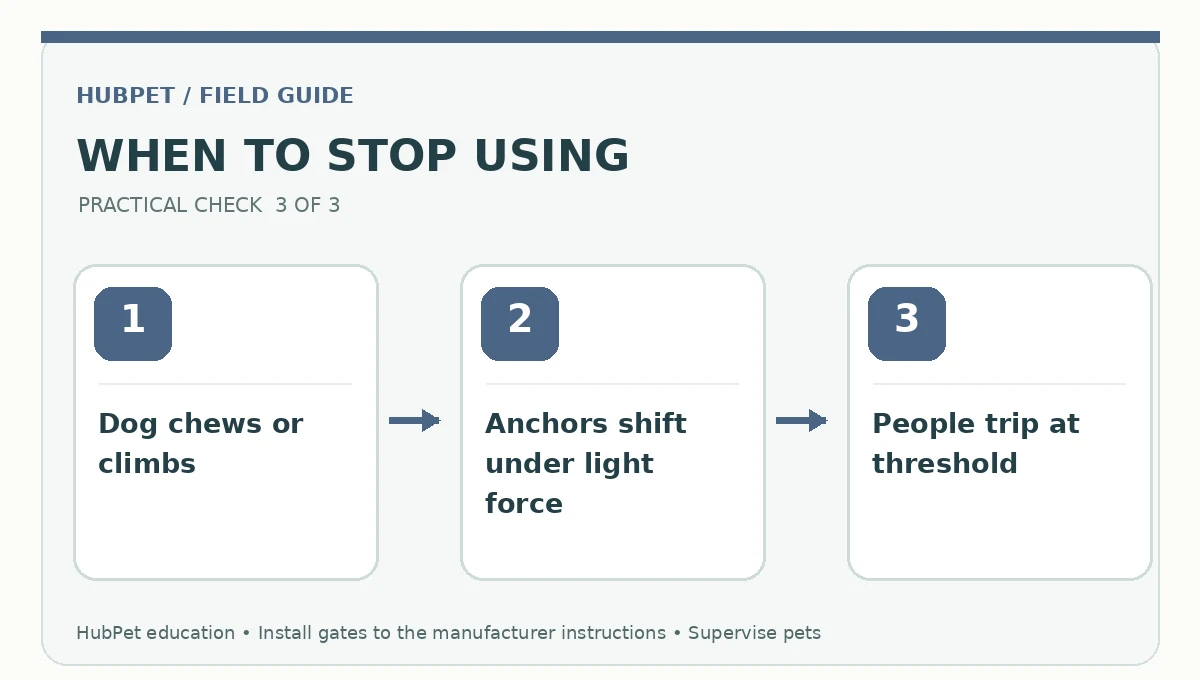
Inspect attachment screws, catch alignment and edges regularly, particularly after pulling on the fabric many times. Wipe grime according to the maker’s cleaning instructions; harsh solvents can affect coatings or fibers. Let the panel dry before rolling it into the housing if the instructions require that step. Keep sharp toys and furniture corners from rubbing the mesh. Stop using the gate at the first broken stitch, bent receiver or slipping mount. If children live in the home, check the separate child-safety rules rather than assuming dog-gate certification covers them.
Compare to rigid alternatives before choosing
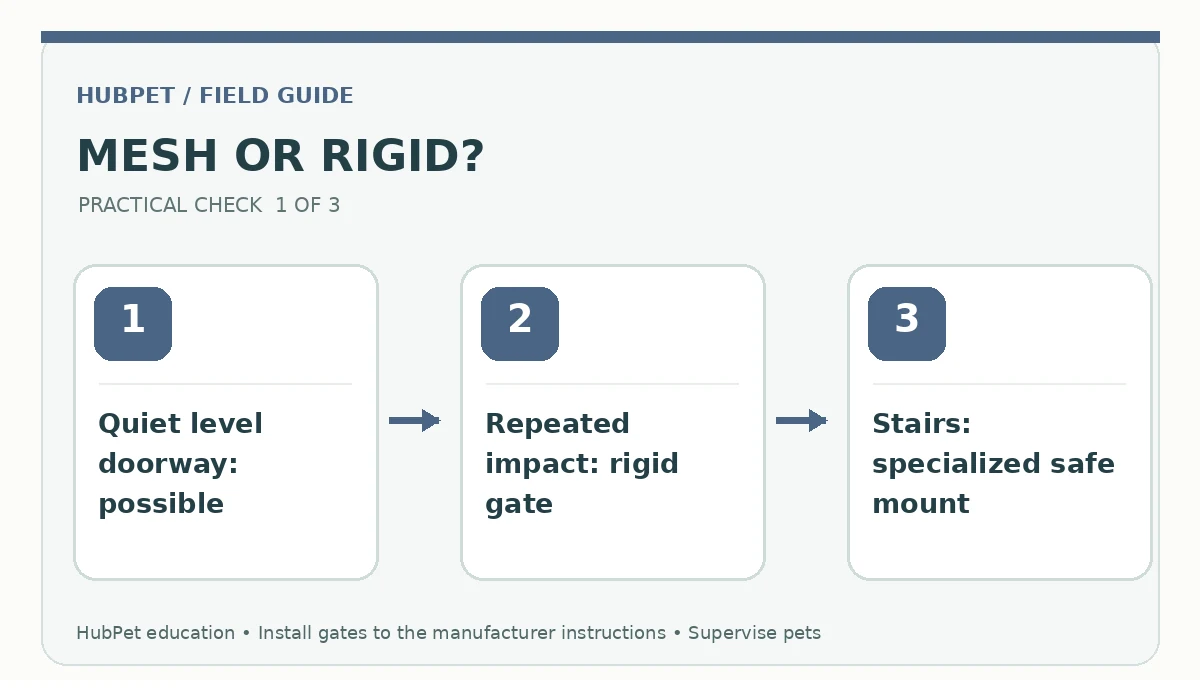
A retractable model may suit a quiet level-floor doorway that people frequently need to open. A rigid hardware-mounted gate is generally more appropriate for larger dogs, persistent jumping or any high-consequence boundary. Freestanding gates offer another portable option but have their own tip risks. Compare not only cost and appearance but also how a barrier fails, where it leaves gaps and whether you can obtain replacement parts. For some households a normal interior door provides more reliable separation and fewer training conflicts. The right choice keeps both pets and people comfortable without expecting fabric to withstand repeated impact.
How We Research
Our editorial review compared animal-welfare recommendations with consumer safety guidance for gate placement, mounting, household hazards, cat introductions, and supervision. Each source supports the specific safety context named above; child-safety gate standards are not interchangeable with pet-gate claims. We did not test gate models, certify installation strength, or receive manufacturer endorsements. Always follow the current instructions for a specific gate and seek qualified installation advice if a mounting surface is uncertain. We reviewed these sources on October 27, 2026. Read about our editorial standards on the About HubPet page.
Sources
American Kennel Club: How to choose a dog gate for the home. Accessed October 27, 2026.
Consumer Reports: Safety gates: mounting and placement guidance. Accessed October 27, 2026.
U.S. Consumer Product Safety Commission: Childproofing your home: safety gates. Accessed October 27, 2026.
Perma Child Safety Support: What retractable gates can and cannot contain. Accessed October 27, 2026.
Do not rely on mesh alone for a dog that repeatedly jumps, chews or hits a barrier. Check manufacturer limits and consider a rigid fixed gate.
Avoid assuming that is safe. Stair placement needs location-specific approved hardware and relevant safety standards; rigid hardware-mounted gates are the safer default.
Stop relying on that setup for containment. A widening bottom gap can create an escape and entrapment risk.
Not necessarily. Ease of use is not child-safety certification. Pet gates must not stand in for approved child safety gates.
Frayed edges, slack fabric, damaged stitching or a slipping latch call for immediate removal from service and appropriate replacement.