
This article is general information, not veterinary advice. If your pet seems unwell, is in pain or may have eaten something harmful, contact your vet or an animal poison control line right away. Read our vet disclaimer.
Houseplants that are toxic to cats and dogs include true lilies and daylilies for cats (ASPCA, 2026). Sago palm, dieffenbachia, golden pothos, philodendron, and cyclamen can affect both species (ASPCA, 2026; ASPCA, accessed 2026). The severity is not equal across plants (ASPCA, 2026). True lilies can cause kidney failure in cats (ASPCA, 2026). Pothos and dieffenbachia mainly cause intense mouth and swallowing irritation (ASPCA, accessed 2026).
Houseplants That Are Toxic to Cats and Dogs: 6 to Know
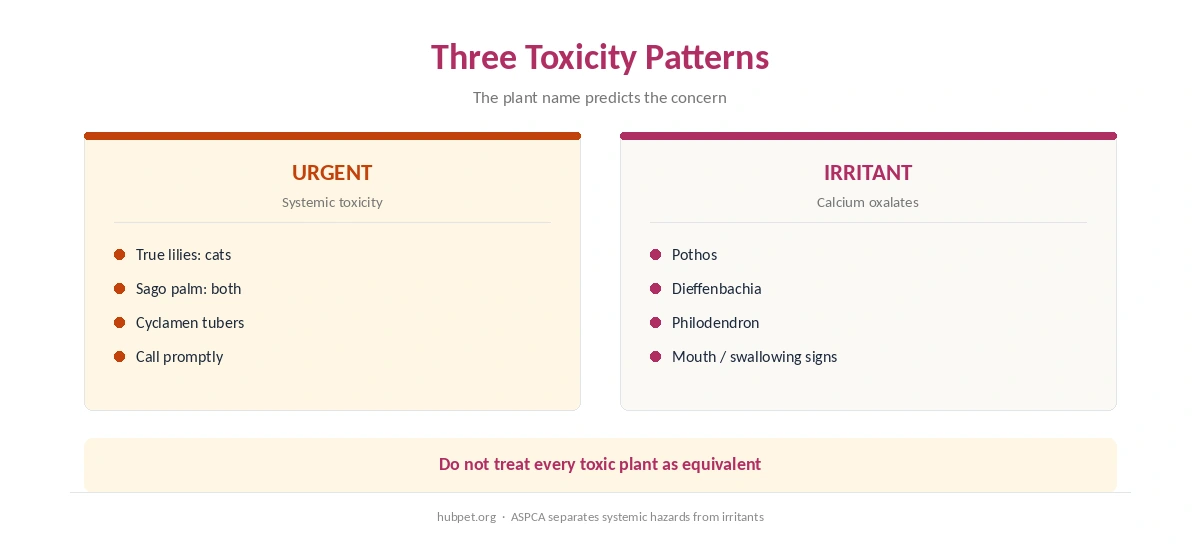
A practical list of houseplants that are toxic to cats and dogs separates severe systemic hazards from common irritants (ASPCA, 2026). Lilies in the Lilium or Hemerocallis groups can be lethal to cats even after small pollen exposure (ASPCA, 2026). Sago palm can cause severe stomach signs, liver damage, bleeding problems, seizures, and death in dogs and cats (ASPCA, 2026). Meanwhile, dieffenbachia, pothos, and many philodendrons contain insoluble calcium oxalates (ASPCA, accessed 2026). These crystals irritate the mouth and can make swallowing difficult (ASPCA, accessed 2026).
| Plant | Risk described by sources | Source |
|---|---|---|
| True lilies / daylilies | Cats: kidney failure risk from plant, pollen, or vase-water exposure | ASPCA 2026 / FDA 2026 access |
| Sago palm | Dogs and cats: severe GI signs, liver damage/failure, bleeding and seizures | ASPCA 2026 |
| Dieffenbachia | Dogs and cats: oral burning, drooling, vomiting, difficulty swallowing | ASPCA 2026 access |
| Golden pothos | Dogs and cats: oral irritation, drooling, vomiting, difficulty swallowing | ASPCA 2026 access |
| Philodendron | Dogs and cats: calcium-oxalate mouth irritation and swallowing difficulty | ASPCA 2026 access |
| Cyclamen | Dogs and cats: GI signs; large tuber ingestions can affect heart rhythm or trigger seizures | ASPCA 2026 access |
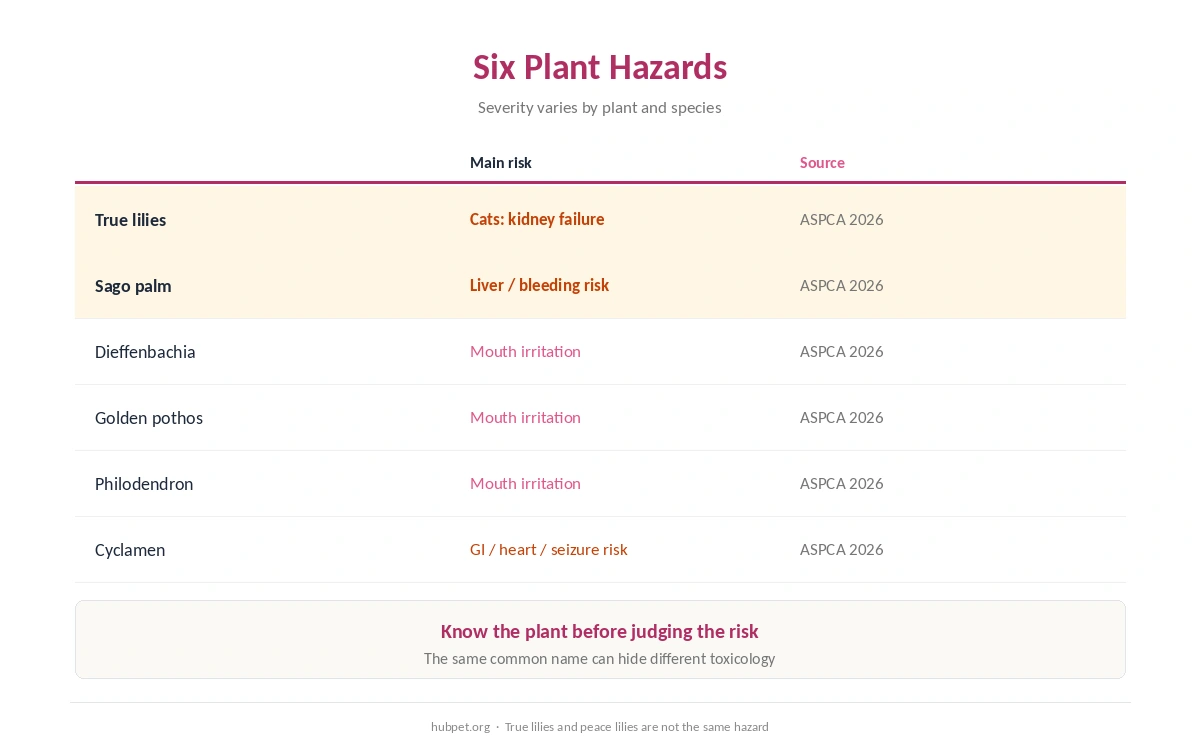
Houseplants That Are Toxic to Cats and Dogs Are Not Equally Dangerous
True lilies and daylilies deserve a separate warning for cats (ASPCA, 2026). ASPCA says even small pollen exposures can cause kidney failure in cats (ASPCA, 2026). FDA says the stem, leaves, flowers, pollen, and vase water can expose a cat to the toxin (FDA, accessed 2026). Dogs do not develop the same lily-related kidney failure, although they may have stomach upset (FDA, accessed 2026).
Sago palm is a high-concern plant for both dogs and cats (ASPCA, 2026). ASPCA identifies all parts as toxic and says the seeds contain the highest concentration (ASPCA, 2026). By contrast, pothos, dieffenbachia, and philodendron contain insoluble calcium oxalates (ASPCA, accessed 2026). They can cause immediate mouth irritation, drooling, vomiting, and difficulty swallowing (ASPCA, accessed 2026). Therefore, the plant name helps the veterinary team judge the exposure.
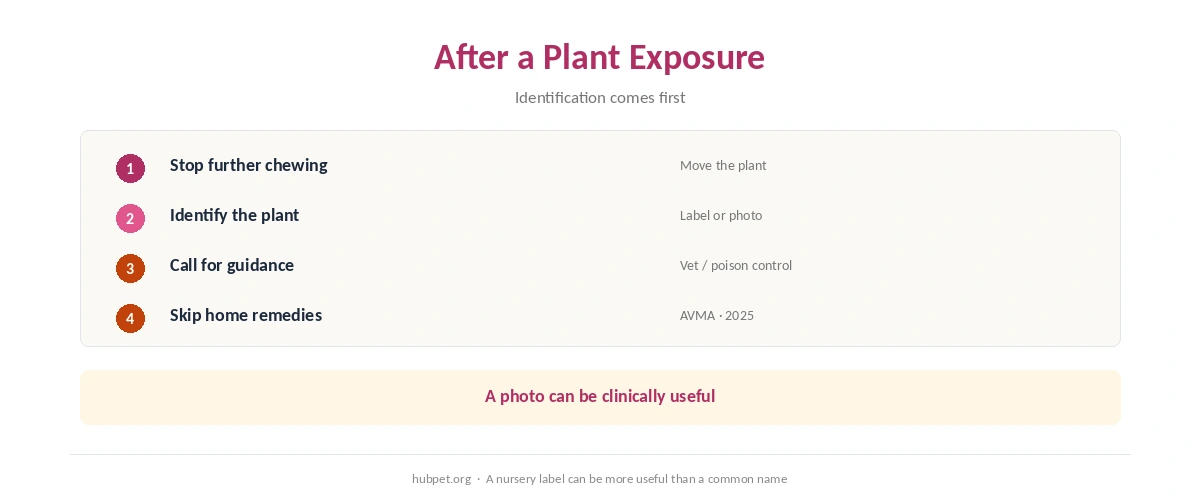
What to Do If a Pet Chews a Toxic Houseplant
If a dog or cat chews a potentially toxic plant, remove access first (ASPCA, accessed 2026). Then contact a veterinarian or animal poison-control service promptly (AVMA, 2025). Keep the plant label or take a clear photo for identification (FDA, accessed 2026). In addition, do not induce vomiting or give medication on your own (AVMA, 2025). A veterinarian or poison-control center should direct those steps (AVMA, 2025).
- Move the pet away from the plant and prevent another bite (ASPCA, accessed 2026).
- Keep the plant tag, nursery label, or a clear photo available for identification (FDA, accessed 2026).
- Call your veterinarian, emergency hospital, or animal poison-control service promptly (AVMA, 2025).
- Do not induce vomiting or give medication unless a veterinary professional directs it (AVMA, 2025).
When to Call Your Vet
With houseplants that are toxic to cats and dogs, call promptly after any suspected exposure (ASPCA, accessed 2026). Plant identity changes the risk (ASPCA, accessed 2026). A cat that contacts a true lily or daylily needs urgent veterinary guidance (ASPCA, 2026; FDA, accessed 2026). Do not wait for visible symptoms (ASPCA, 2026). For sago palm, ASPCA also urges immediate veterinary contact because severe liver and bleeding complications can develop (ASPCA, 2026).
Go now for trouble breathing, collapse, seizures, or other rapidly worsening signs (Merck Veterinary Manual, 2025). The pet emergency signs page covers the broader red-flag list. For a food exposure, see foods that are toxic to cats. That guide separates the main cat food hazards from dog-specific warnings.
How We Research
HubPet works from published veterinary and animal-welfare guidance rather than personal anecdotes. We read these sources on October 11, 2026: ASPCA toxic plant guidance (2026), ASPCA toxic plant database (accessed 2026), FDA lily safety guidance (accessed 2026), ASPCA sago palm entry (accessed 2026), ASPCA pothos entry (accessed 2026), Merck emergency guidance (2025). We also follow the research method described on How We Research.
Houseplants That Are Toxic to Cats and Dogs FAQ
No. FDA distinguishes true lilies and daylilies from plants such as peace lilies (FDA, accessed 2026). True lilies can cause kidney failure in cats, while peace lilies mainly cause calcium-oxalate irritation (FDA, accessed 2026).
Yes. ASPCA lists golden pothos as toxic to dogs and cats (ASPCA, accessed 2026). Its insoluble calcium oxalates can cause oral irritation, drooling, vomiting, and difficulty swallowing (ASPCA, accessed 2026).
Yes. ASPCA says sago palm is toxic to dogs and cats (ASPCA, 2026). Severe cases can involve liver damage, bleeding problems, seizures, and death (ASPCA, 2026).
Bring the plant label if available or take a clear photo. FDA specifically recommends helping the veterinarian identify the plant after a suspected lily exposure (FDA, accessed 2026).
Not unless a veterinarian or poison-control professional directs you. AVMA gives that instruction for suspected poison exposures (AVMA, 2025).
The Bottom Line
Houseplants that are toxic to cats and dogs differ sharply in severity (ASPCA, 2026). Therefore, prevention starts with the botanical identity (ASPCA, 2026). Keep true lilies out of homes with cats and keep sago palm away from both dogs and cats (ASPCA, 2026). For pothos, dieffenbachia, philodendron, or cyclamen, prevent chewing (ASPCA, accessed 2026). Call promptly after a suspected exposure (ASPCA, accessed 2026).