
Your dog rests next to you and makes tiny, repeated pinches with its front teeth on a sleeve or forearm. People sometimes call this “cobbing” because the motion resembles nibbling a corn cob. Gentle nibbling can occur in affiliative contact, play, or self-soothing, but the motion is not a promise that the dog is comfortable in every situation. Human skin is delicate, and excited mouthing can escalate. First identify the context and the pressure; then decide whether to redirect. Never use the nickname “love bites” to dismiss discomfort or a bite risk.
Identify the motion before assigning meaning
Cobbing describes small front-incisor movements, often made without a full-mouth grip. It differs from a sustained hold, a forceful snap, or a puppy racing around biting hands during play. Note where the teeth land, whether the dog grips fabric, how hard the contact feels, and whether the dog disengages easily. The term describes behavior rather than diagnosing affection, anxiety, or a medical condition. Whole Dog Journal discusses several possible contexts for cobbing. A single contact can be comfortable to one dog and unwelcome to a person, which is enough reason to set a boundary.
Read the rest of the dog, not just the teeth
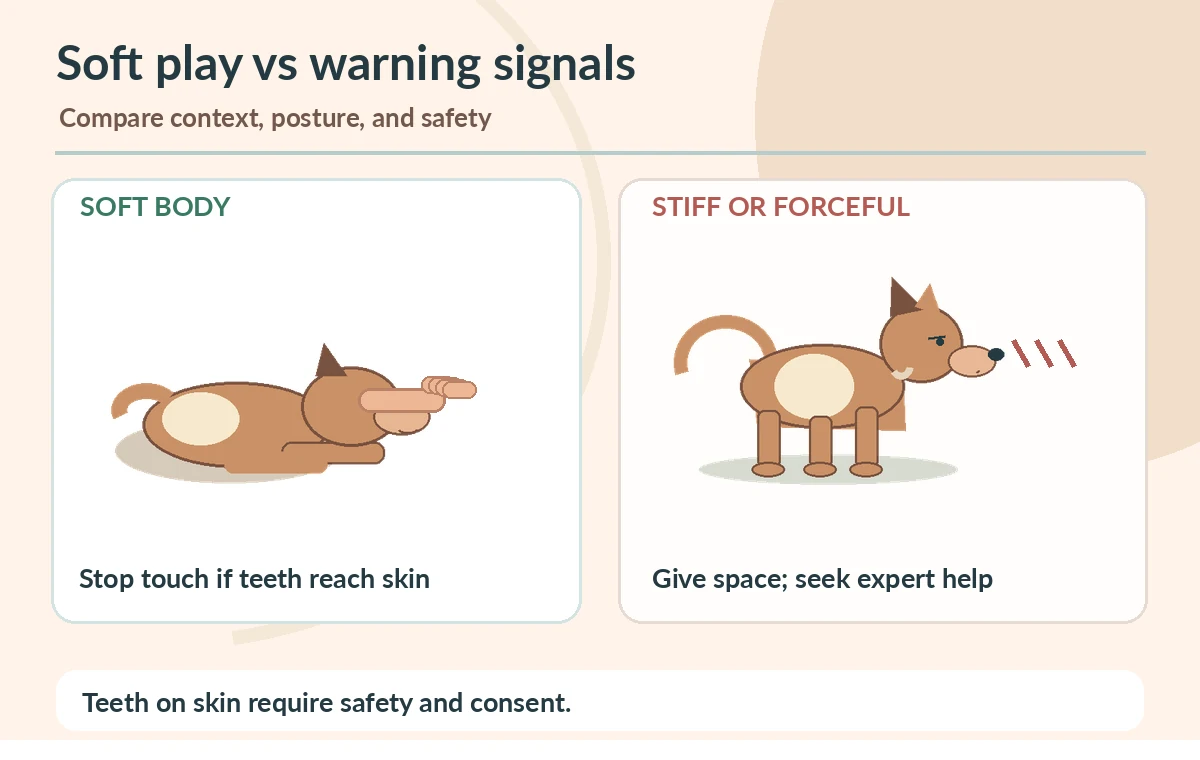
Soft eyes, loose posture, normal breathing, and voluntary approach often support a calm social context. A dog that stiffens, freezes, gives a hard stare, curls the lips, growls, or attempts to move away needs space immediately. The ASPCA’s dog-bite guidance emphasizes the whole body and respect for warning signals. Never keep petting simply because the nibble is light; a dog may have mixed feelings about touch. If the dog gently mouths during stroking and then turns away, stop touching and allow an easy exit instead of pulling the dog back.
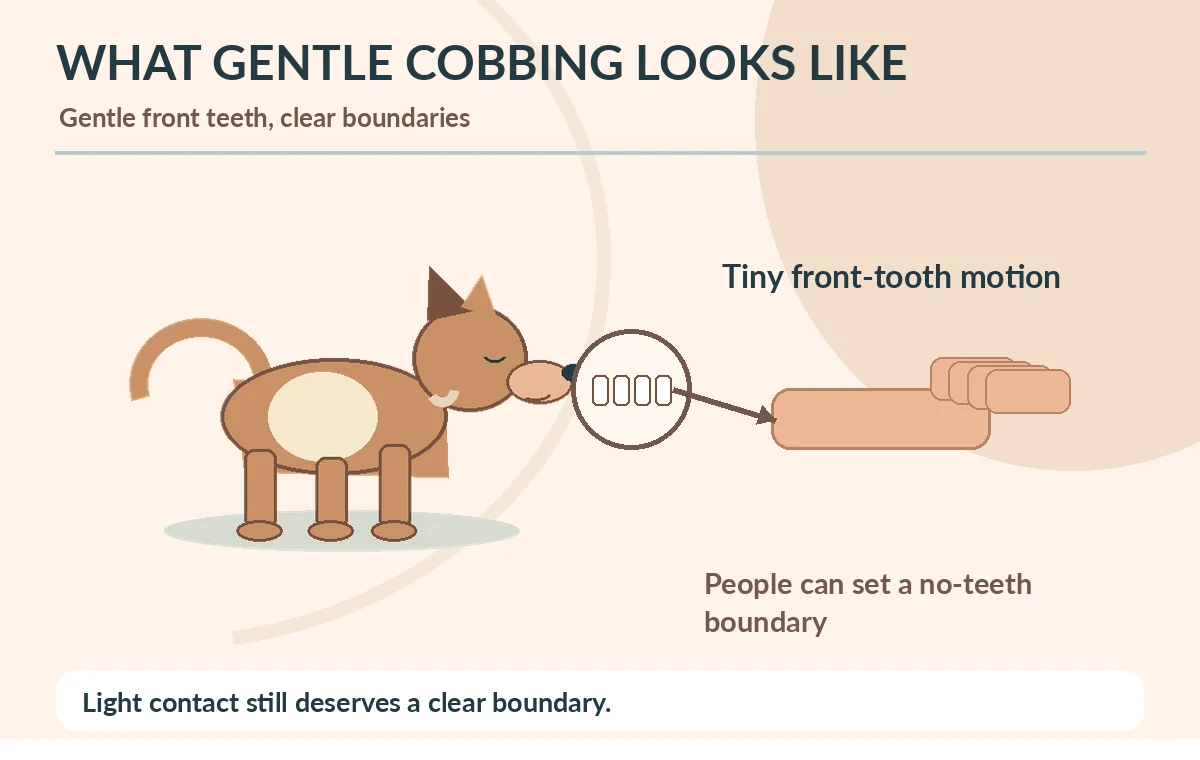
Understand why excitement makes it sharper
A dog may start with gentle front-teeth contact and then grab clothing during an energetic greeting or fast game. Arousal changes coordination and makes accidental pressure more likely, particularly in a large adult dog. Dogs Trust describes how mouthing and nipping can appear during excitement and play. Avoid wrestling with bare hands or encouraging repeated mouth contact as a greeting ritual. Instead, greet quietly, toss a suitable toy to carry, or begin a familiar reward-based cue before the dog becomes frantic. Keep interactions short enough that the dog can succeed.
Make your boundary predictable and calm
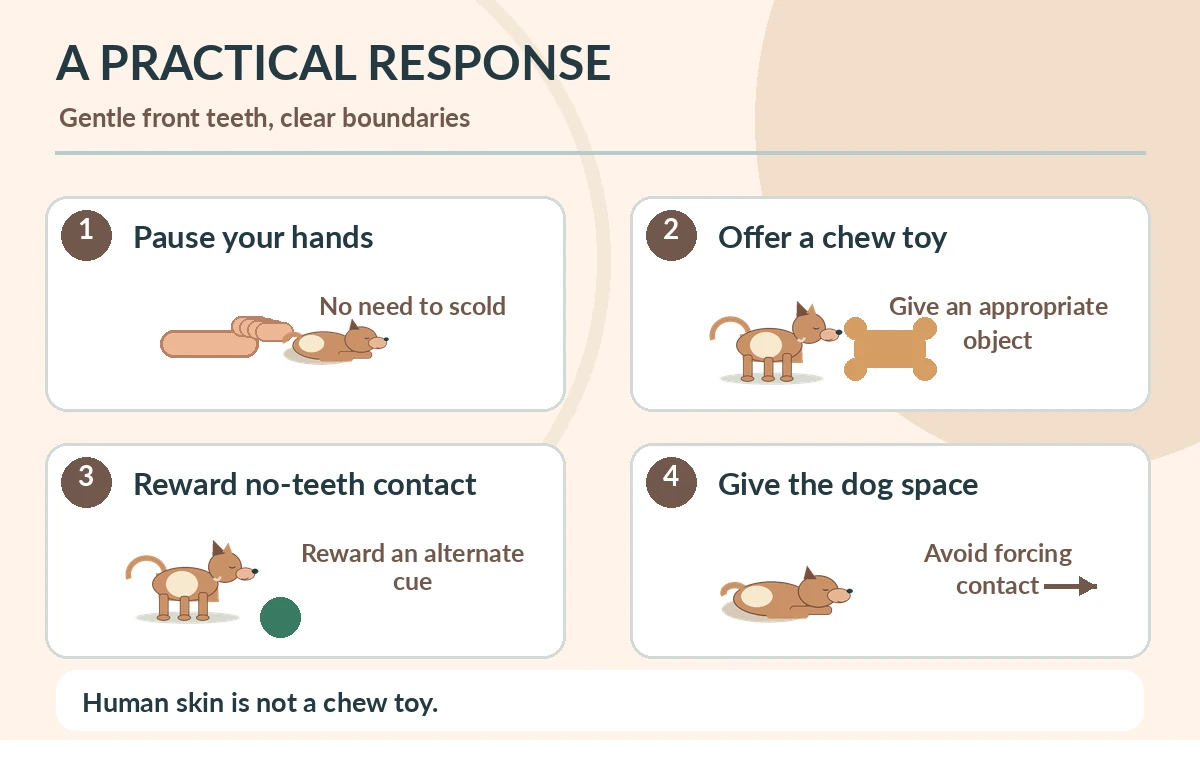
You do not have to accept teeth on skin, even when a dog seems affectionate. At the first gentle nibble, pause petting and quietly move your hands out of reach without startling or scolding. Offer an appropriate toy or shift to a low-key activity if the dog wants engagement. Reward contact that keeps teeth off you, such as a nose touch to an offered target. The ASPCA recommends replacing mouthing with appropriate activities. This is not a contest to prove dominance; it is a clear household rule taught consistently with positive experiences.
Teach a better way to request attention
Choose one alternate behavior: sitting nearby, resting a chin on a cushion, or touching a target with the nose. Practice in a quiet room when the dog is calm. Mark and reward the desired action, then give brief attention only while the dog remains comfortable. If the dog goes back to nibbling, end the touch for a moment and reset to an easier situation. Do not repeatedly shove a toy into the dog’s face, hold the muzzle closed, or intimidate the dog. AVSAB’s humane-training guidance favors reinforcement and safe management.
Add special rules around children and visitors
Do not allow front-tooth nibbles on children, babies, or guests. Adults should supervise dog-child interactions closely, and children should never handle a dog while it sleeps, eats, guards a toy, or seeks space. Teach visitors to wait for the dog to approach instead of offering fingers near its mouth. Use a barrier or separate resting area when introductions are hectic. A playful intention does not prevent injury. The ASPCA advises people to avoid dogs showing fear or tension and to respect a dog that turns away. Prioritize everyone’s comfort rather than a cute demonstration.
Know when nibbling is no longer just a habit
Contact that bruises, breaks skin, escalates in intensity, appears suddenly during handling, or accompanies rigid posture requires a different response. Stop interaction safely and seek guidance from a veterinarian or qualified reward-based behavior professional. A pet that suddenly avoids handling might be uncomfortable or ill; do not diagnose pain, skin disease, or dental trouble from this behavior alone. If there is a human bite injury, obtain appropriate medical advice. Do not force exposure or punish growls; suppressing warning signals can make interactions less predictable.
Use an easy observation log and decision
Write down what preceded the nibble, its pressure, the dog’s posture, your response, and what happened next. For example, calm petting on the couch calls for stopping touch and offering choice if the dog mouths; wild arrivals call for a calmer greeting plan. Trouble during grooming or harness handling merits a slower cooperative approach and possibly veterinary assessment. Consistency across adults matters more than perfect timing. The goal is a dog that can request connection without teeth on human skin, not a dog whose every little nibble gets a fixed “bad” or “loving” label.
How We Research
We examine primary veterinary or recognized animal-welfare guidance, compare it with practical behavior observations, and separate supported claims from plausible but uncertain explanations. We avoid treating isolated gestures as diagnoses and prioritize voluntary interaction, reward-based education, and clear veterinary escalation signs. This guide was reviewed against the linked resources on October 27, 2026; it does not replace individual clinical or behavior advice. Learn about our standards on About HubPet.
Sources
Whole Dog Journal, Cobbing in Dogs: Read source. Accessed October 27, 2026.
ASPCA, Mouthing, Nipping and Play Biting in Adult Dogs: Read source. Accessed October 27, 2026.
ASPCA, Dog Bite Prevention: Read source. Accessed October 27, 2026.
American Veterinary Society of Animal Behavior, Humane Dog Training: Read source. Accessed October 27, 2026.
Safety note: Sudden behavior changes, pain, distress, breathing difficulty, or bites call for individualized veterinary or professional help. See our veterinary disclaimer.
That small front-tooth motion is often called cobbing. It may occur during social contact or play, but context and body tension matter.
No. The same movement can occur during excitement or discomfort. Watch whether the dog is loose, comfortable, and able to disengage.
It is reasonable to set a no-teeth-on-skin boundary. Quietly pause touch and reinforce a toy, nose target, or calm greeting instead.
Fabric moves and may invite investigation or play. Prevent snags or swallowed threads and redirect toward a safe toy when needed.
Seek qualified help if pressure escalates, skin breaks, the dog freezes or growls, or the behavior suddenly starts during touch or handling.