
A pet gate with a cat door sounds ideal when you want a dog to stay in one room while the cat travels freely. The detail that matters is the pass-through: some cats dislike squeezing through unfamiliar openings, while small dogs may fit through a door marketed for cats. The latch may also allow unwanted encounters during introductions. This guide helps you plan a gate for two species, test whether the cat can use it voluntarily and recognize when a solid door or separate room is safer. For fearful pets or bite risks, consult a veterinarian or qualified behavior professional and see HubPet’s veterinary disclaimer.
Start with a simple access map
Draw the two rooms and mark where each pet needs to reach food, drinking water, litter, beds and people. A cat who must pass through a dog’s resting area to reach a litter box may feel trapped even if the small flap technically opens. Decide whether you need a permanently open cat passage, a lockable flap or a gate used only during supervised introductions. Cats Protection emphasizes giving cats choices and retreat space during introductions. Do not assume a cat will feel safe walking close to a barking dog. Position resources so neither animal has to negotiate a tense threshold to meet basic needs.
Measure the actual small-door opening
Compare the clear usable width and height of the cat flap, not the product’s outer frame. A long-haired, senior or larger cat may hesitate at a narrow, noisy hinged door. Inspect the threshold height, corners and any raised ridge under the flap. Let the cat explore an uninstalled or fully open flap before expecting routine use. A cat that refuses a passage has not failed training; the design may be wrong. Avoid making a hesitant pet go through by pushing or carrying it. A second full-size route should remain available while you assess acceptance.
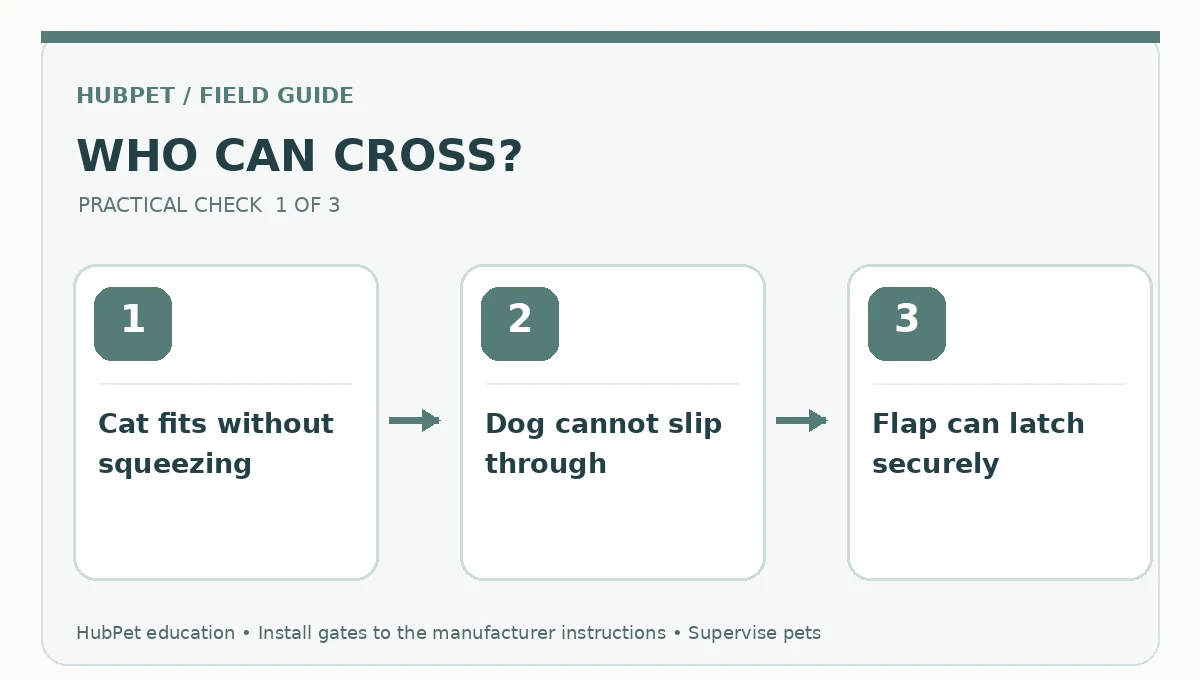
Check whether the dog can use the cat door
Small terriers and flexible puppies may fit through a cat opening that appears too small to an adult person. Other dogs may push a hinged flap with a nose or paw until the latch releases. Test whether the flap swings in both directions and whether it can be secured. Do not use an open cat passage when the dog’s access must be reliably restricted from medication, stairs or another animal. An opening that is safe for one cat may not contain every dog in the household. Choose a solid divided-room arrangement instead if escaping would create serious risk.
Think about cats that jump instead of using the flap
A tall gate with a small cat door does not necessarily persuade a cat to choose the door. Many cats jump onto the panel or climb nearby furniture to cross above it. Keep sharp or unstable objects away from the landing area and make sure a leap cannot end in a fall. If an older or arthritic cat cannot jump comfortably, design a low, easy route that does not expose the animal to unwanted contact. Avoid modifications with cut wire, exposed edges or strings. Barrier choice should preserve feline movement, not create a new obstacle course.
Use an ordinary gate differently during introductions
A gate with an unlocked pet flap is not a secure separation tool if two unfamiliar animals must avoid direct contact. For early dog-cat meetings, begin behind a closed door, trade scents and progress to controlled visual contact. American Humane recommends supervision and a leashed dog during introductions. Keep any small cat door closed and securely latched during these sessions when contact would be unsafe. Watch the cat’s ears, posture and ability to withdraw. A calm moment at the gate is progress; forcing repeated exposure until an animal gives up is not a welfare goal.
Inspect the latch, hinges and bar spacing
A useful latch should be simple for an adult to check without coming loose when a pet noses it. Examine the small door’s hinges for sharp pins, pinch points or loose screws. Measure larger gate bar spacing against the smallest animal, especially kittens or toy dogs. The overall gate must fit the doorway securely, with mounting suited to the location. Never install an unsuitable pressure gate at a stair drop. Check that the cat passage cannot drift into a partially closed position and catch a tail. The manufacturer’s dimensions and hardware instructions are more important than a marketing photo of one cat.
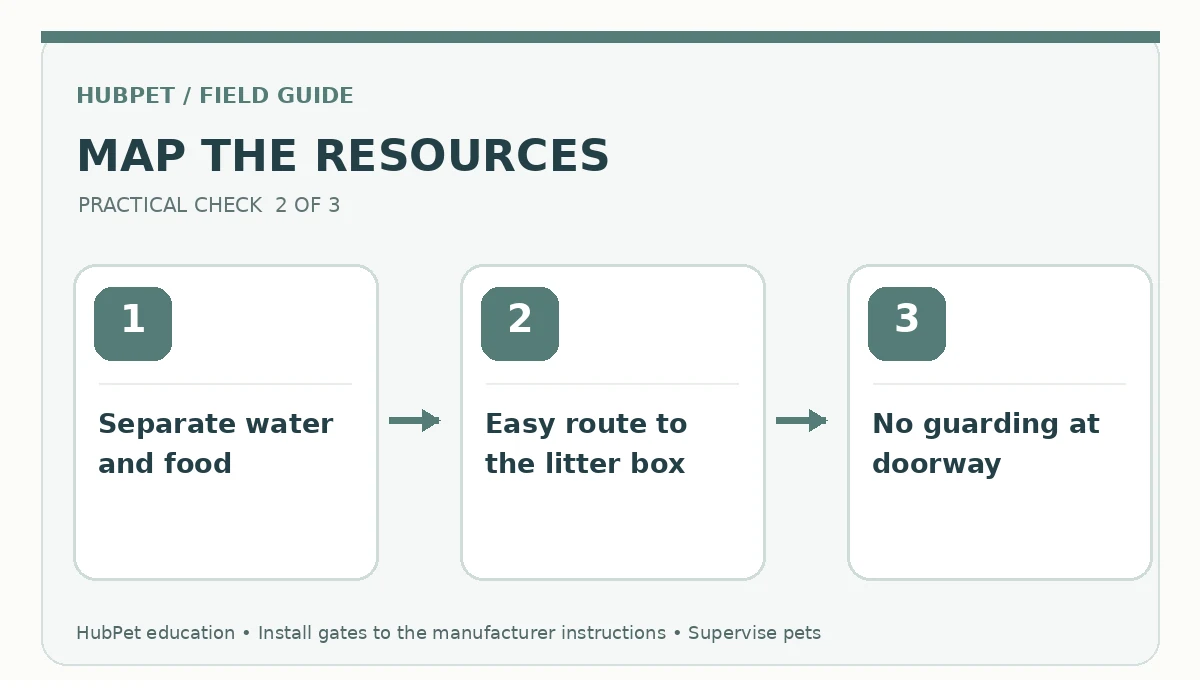
Avoid guarding and blocked escape routes
A confident dog may sit directly beside the flap waiting for the cat, making the threshold unusable. Cats can also guard doorways from one another. Place resting areas and feeding stations away from the opening, and monitor whether a cat routinely pauses, hides or stops using a resource. Increase separation if either animal stalks, chases, growls or shows persistent stress. Training the dog to move away on cue can help, but a gate cannot solve a high-risk inter-animal conflict. Consider consulting a qualified professional before any unsupervised access between animals with chasing or aggression histories.
Give the cat a voluntary practice route
Start by leaving the flap fixed open according to the instructions, with the dog elsewhere. Invite the cat to inspect it and reward comfortable exploration on either side. Place a favorite resting pad nearby but do not put food so close that another pet can guard it. Practice when the house is quiet. Only introduce flap movement once the cat uses the clear opening voluntarily. If the cat avoids the passage for days, reconsider the size or placement rather than withholding essential resources. Preserve ordinary paths to water and litter throughout training.
Decide whether the design truly reduces conflict
A gate with a cat door is worthwhile when the cat willingly uses the route, the dog cannot follow, the main panel stays secure and household routines remain calm. Reject it when the opening creates a pinch hazard, a dog can squeeze through or a cat feels forced past a guarding pet. A plain doorway gate or closed door may offer safer control for introductions. In mixed-pet households, a simple diagram of who can reach each resource often reveals more than a shopping comparison. Observe real behavior after installation instead of assuming a small flap will create harmony.

How We Research
Our editorial review compared animal-welfare recommendations with consumer safety guidance for gate placement, mounting, household hazards, cat introductions, and supervision. Each source supports the specific safety context named above; child-safety gate standards are not interchangeable with pet-gate claims. We did not test gate models, certify installation strength, or receive manufacturer endorsements. Always follow the current instructions for a specific gate and seek qualified installation advice if a mounting surface is uncertain. We reviewed these sources on October 27, 2026. Read about our editorial standards on the About HubPet page.
Sources
American Kennel Club: How to choose a dog gate for the home. Accessed October 27, 2026.
Cats Protection: Introducing cats with gradual barrier contact. Accessed October 27, 2026.
American Humane Society: Introducing dogs to cats gradually. Accessed October 27, 2026.
Yes, some can. Compare the actual opening with the smallest dog and do not assume a cat-labeled flap restricts dogs.
Not when it allows unsupervised contact. Start with secure separation and gradual controlled introductions.
Offer a safe alternate route and gradually introduce the opening without forcing the cat. Consider a larger or better-positioned passage.
Only a suitably mounted gate approved for that setting can address the stair hazard. A cat door does not make a pressure gate safe at the top.
No. Chasing calls for separation, managed introductions and potentially help from a qualified behavior professional.