
A cat rushing toward an open front door is not necessarily unhappy at home. Outdoor scents, moving animals, unfamiliar noises, or an exciting change in routine can draw an inquisitive cat toward a threshold in seconds. A frightened cat may also bolt without a plan. The priority is to prevent an escape, not to test whether the animal will return on command. This guide offers household layout checks, visitor habits, safer enrichment, and identification steps without frightening or grabbing the cat. If a cat is already missing, follow a local lost-cat response process rather than waiting for it to return on its own. See our veterinary disclaimer for health concerns.
Identify the doorway that actually matters
Watch which exits create risk: a front door used for packages, a sliding patio door, an attached garage, or a hallway outside an apartment. Note when the cat approaches and what it seems to follow. A bird on the porch, a delivery sound, or someone returning home may be more exciting than the door itself. Check whether screens latch and whether the cat could push against them. Treat every external opening as a physical boundary. No training cue can guarantee that a startled cat will stop at a threshold.
Curiosity, chase, and fear can look identical at first
An alert cat with forward ears might be following outdoor scent, while a low, darting cat may be escaping a scary noise. Some cats simply learn that a door opening predicts an interesting view. Read the full body posture and the household context rather than assigning one motive. If your cat becomes unusually frantic after a new animal, move, or disruption, provide quiet hiding places and consult a veterinarian if stress or behavior changes persist. Do not punish a cat for approaching a door; that adds fear around an already risky moment.
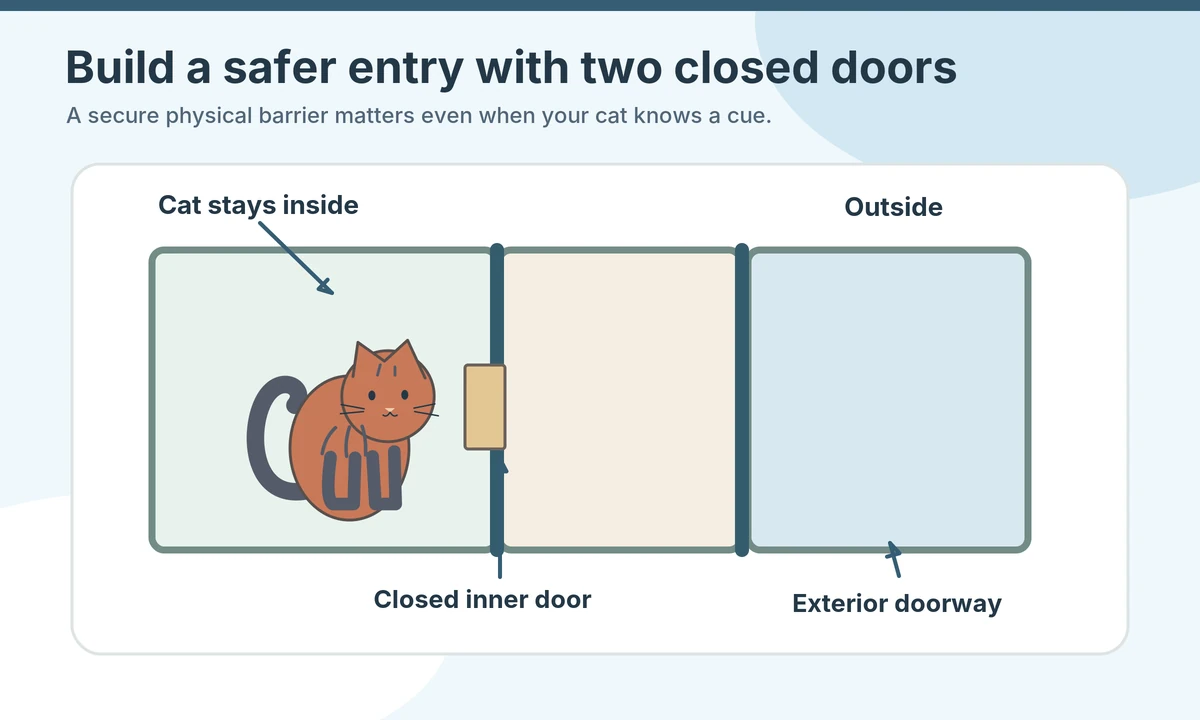
Use a real second barrier during busy arrivals
For a reliable safety margin, separate the cat from the exit before opening it. Close an interior room door, use a securely fitted pet gate only where the cat cannot leap or slip around it, or create a small entryway with a closed second door. A light folding screen is not a dependable cat barrier, and a doorbell alone is not containment. Set up the safe area before visitors arrive, with water, a resting place, and familiar enrichment if the separation will last. Check the latch before unlocking the outer door.
Give visitors one simple instruction
A beautifully arranged entry is useless if the next guest props the door open. Ask family members, delivery helpers, and repair workers to keep the outside door shut and to wait until the cat is safely secured. Post a human-readable reminder near the handle if it helps. Avoid relying on a person to block the cat with a foot or to catch it mid-leap. During moves, parties, or repeated trips to a vehicle, place the cat in a closed, quiet room before carrying items through the doorway. Check that everyone knows which room is occupied.
Offer a better place to watch the world
A stable window perch behind a secure screen, a cat tree with a view, and short interactive play sessions give an indoor cat opportunities to observe and investigate safely. Use toys that mimic hunting movements without letting strings or small parts stay unattended. Offer puzzle feeding or scattered treats as appropriate for the cat’s diet, preferably away from the exit. These supports may reduce fixation on the front door, but enrichment is not a substitute for a latch. Check the screen frame regularly: insect mesh is not designed to restrain a determined animal.
Practice moving away from the door voluntarily
Start when the entry is closed. Toss a treat toward a mat or safe room and reward the cat for choosing that location. Later, practice quiet door-handle movements with another adult managing the secure barrier. Keep repetitions short and stop if the cat becomes tense. A cue can help with routine arrivals but should never be your only escape-prevention layer. Do not squirt water, startle the cat, or turn an escape into a chase. These reactions can increase anxiety and darting. Physical management comes before training progress.
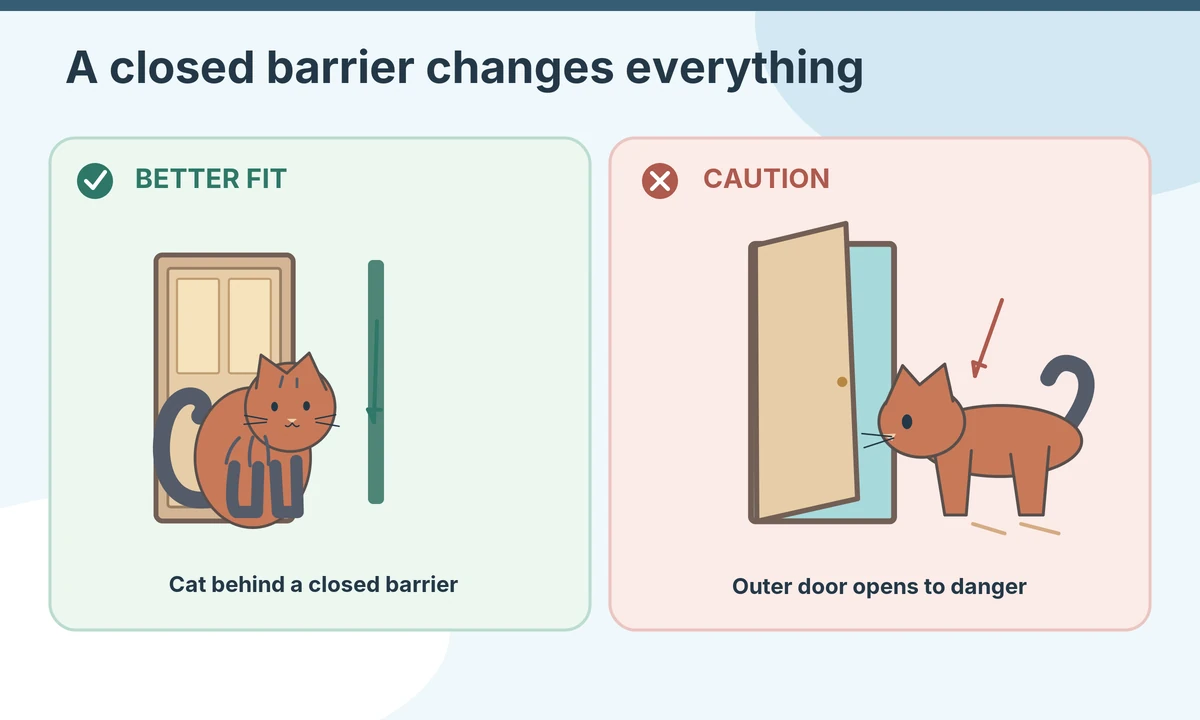
Secure windows, balconies, and other routes
A door runner may also investigate unscreened windows or a cracked garage opening. Inspect every exterior route from the cat’s height, including torn mesh, poorly fitted balcony enclosures, and latches that do not catch. A screen that keeps insects out may not hold a climbing cat. Never leave a cat unattended on an open balcony or rely on a harness as a substitute for secured home exits. If you offer outdoor time, use a professionally secured catio or controlled, supervised activity that fits the individual cat. Look for gaps again after repairs or storms.
Prepare identification before an escape happens
A registered microchip with current contact details can help shelters and veterinary clinics identify a found cat; it is not a GPS tracker. If your cat tolerates a collar, use a properly fitted quick-release design with clear ID and inspect it regularly. Photograph the cat in good light, including distinctive markings, and store the image where family members can retrieve it. Keep microchip provider information accurate after moving or changing phone numbers. These steps do not make roaming safe, but they improve the chance of reunification if a barrier fails.
Know what to do if the cat slips out
Stay calm, close other exits, and avoid rushing or shouting at the cat. Look first near familiar hiding areas and ask neighbors to check sheds, garages, and parked vehicles without putting themselves at risk. Inform the microchip registry, nearby shelters, and veterinary clinics; use a recent photo and verified contact details for alerts. Follow local shelter guidance for searching at suitable times and for humane recovery. Never assume a cat will return just because it knows the neighborhood. If you see the cat, use food and a calm approach instead of a sudden grab.
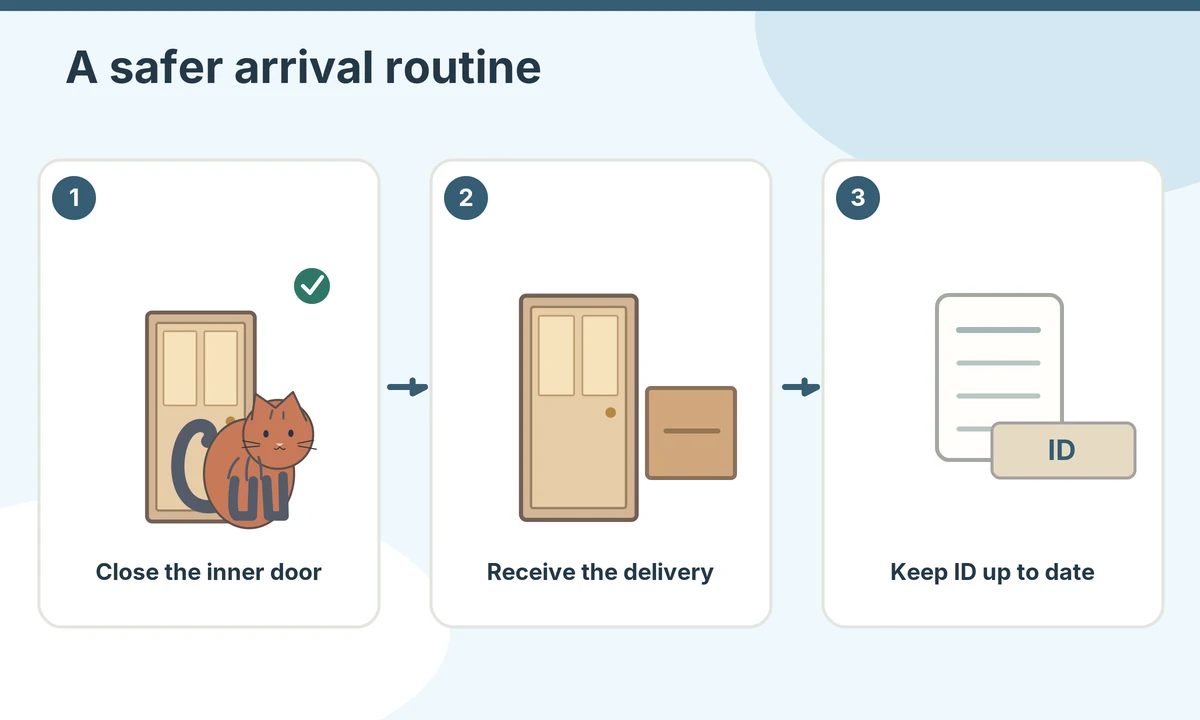
Recheck the routine whenever household traffic changes
New roommates, school schedules, grocery deliveries, and holidays can create escape opportunities in homes that usually feel controlled. Do a quick door drill before busy periods: which barrier closes, who checks it, and where will the cat wait? Keep resting and feeding resources away from the busiest exterior opening when possible. Have everyone practice securing the cat without panic. Cats differ in curiosity and confidence, so adjust the plan to the animal rather than blaming its personality. Prevention works best as a boring, repeatable household habit.
Prioritize the closed door over a perfect cue
If a plan depends on a cat listening every time the door opens, it is too fragile. A sturdy latch, predictable visitor routine, safe separation, and up-to-date ID are the useful foundation. Play and reward-based stationing can make daily life smoother, but neither replaces physical containment. Give the cat choices and interesting indoor activities, then assess whether the most tempting doorway is still secure during real deliveries. The goal is not to eliminate curiosity. It is to keep curiosity from turning into a dangerous outdoor emergency.
How We Research
HubPet checked animal-welfare and municipal shelter guidance on escape risks, identification, household barriers, and cats’ environmental needs. Our door layouts are original instructional diagrams; no gate or screen shown is a certified restraint. Use manufacturer installation directions and verify every opening in the actual home. Visit our editorial information for context on HubPet content standards.
Sources
Cats Protection, Lost a Cat — https://www.cats.org.uk/help-and-advice/lost-found-and-feral-cats/lost-a-cat (accessed October 2026).
Cats Protection, Keeping Cats Safe Outside — https://www.cats.org.uk/help-and-advice/caring-for-your-cat/home-and-environment/keeping-cats-safe-outside (accessed October 2026).
Seattle Animal Shelter, Lost Pet Prevention — https://www.seattle.gov/animal-shelter/find-an-animal/lost-pets/lost-pet-prevention (accessed October 2026).
AAFP/ISFM, Feline Environmental Needs Guidelines — https://pmc.ncbi.nlm.nih.gov/articles/PMC11383066/ (accessed October 2026).
Safety note: Never chase a cat into traffic, use force to train door avoidance, or treat ordinary insect screens as escape-proof. If your cat is missing, contact local shelters and veterinary services promptly.
Not necessarily. Outdoor scents, noise, curiosity, or alarm may motivate a dash; first assess context and prevent unsafe access.
No. Many cats can jump or squeeze through gates. Use a properly secured closed door or another verified barrier when risk is high.
You can reward voluntary movement to a safe mat or room, but training must remain a supplement to physical containment.
No. A microchip carries an identification number read by a scanner; keep registration and contact details current.
Avoid a frightening chase. Keep exits secure, search nearby hiding places calmly, and follow local lost-cat reporting advice.