
Dog grooming shears are sharp cutting tools, not an essential first purchase for every owner. Straight, curved, and thinning models do different jobs, and safe results depend heavily on trained technique and a dog that can remain comfortable. A sudden head turn can turn a harmless-looking snip into an injury. This guide helps you recognize the main designs, inspect tool control, and decide which jobs to leave to a professional. It does not teach cutting close to the skin, eyes, or paws. Review the HubPet veterinary disclaimer for health concerns.
Know what straight shears are intended to do
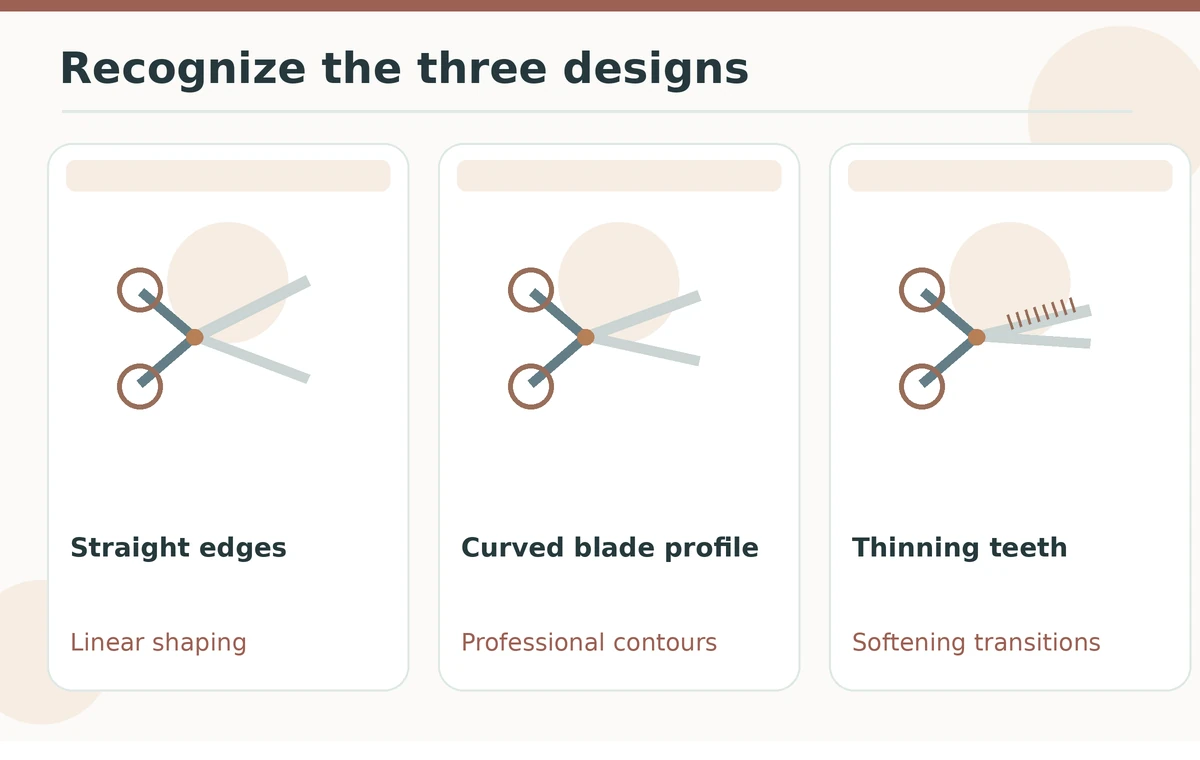
Straight grooming shears have a linear cutting edge that professional groomers use for controlled lines and general shaping. Length, balance, and sharpness influence handling. Long blades may cover more coat but are harder to manage around a moving animal. Shorter blades can offer greater control, yet even small scissors can cut skin instantly. If you are new to trimming, do not treat smaller shears as permission to trim the face, feet, or skin folds without hands-on instruction.
Understand curved shears without overestimating them
Curved blades help trained groomers shape rounded contours, such as the outline of a coat. However, their cutting path is less intuitive than a straight line when you are looking from an unfamiliar angle. They can also invite owners to follow the body’s curve too closely. Examine the blade profile before purchase. A curved tip does not mean the tool is safe against skin. Professional demonstration is more important than copying a video sequence.
What thinning and blending shears actually change
Thinning shears use a toothed blade to remove portions of hair rather than making one solid cut. Blending styles can soften visible transitions. The term ‘gentle’ on a listing does not mean a toothed blade cannot catch skin or hair. Misuse may create uneven patches and tugging. Ask a groomer whether your dog’s coat should be thinned at all. For many everyday owners, routine brushing and scheduled professional trims solve the problem without adding another cutting tool.
Inspect design features that affect control
Look for comfortable finger rings, a stable pivot, even blade alignment, and a secure way to close and store the tool. A finger rest may improve balance for some hands but not for every grip. A loose pivot can make blades chew the coat, while extremely tight movement can prompt jerky hand pressure. Do not test sharpness on a pet. Instead, have tools demonstrated by a professional and keep them closed and out of reach when not in use.
Avoid scissors on tangles and mats
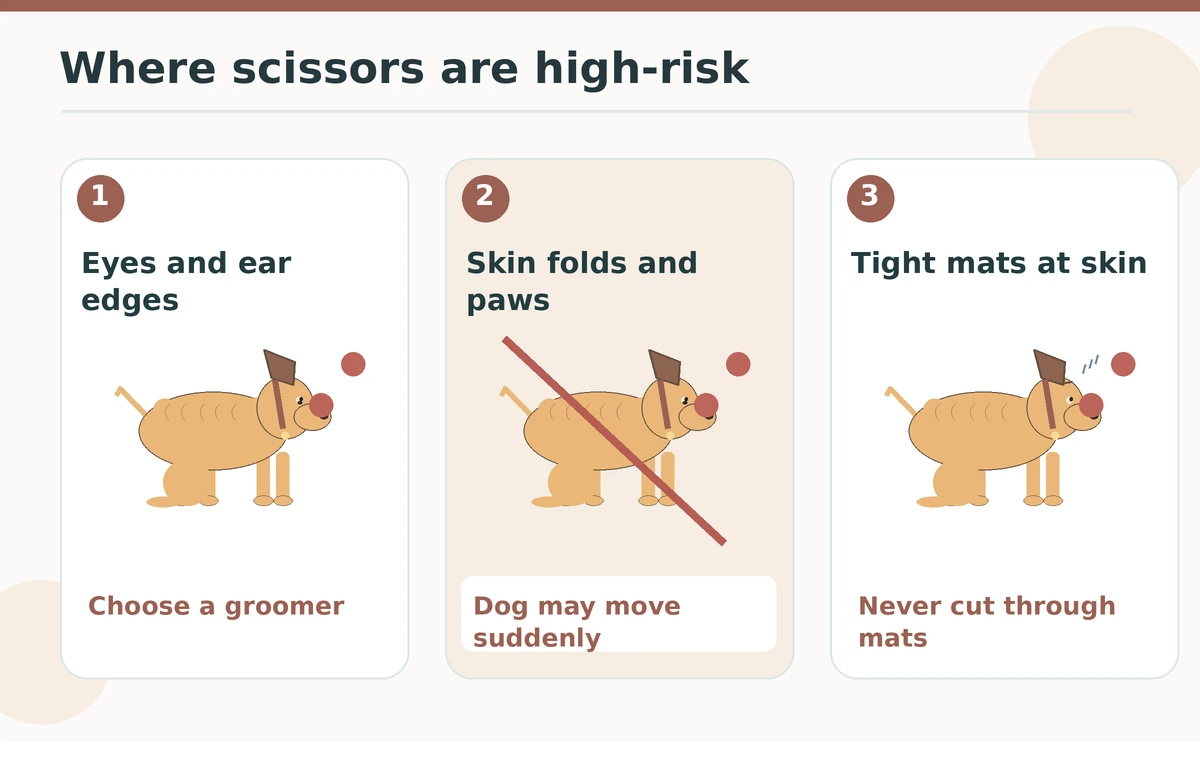
Matting can pull skin into folds that are nearly impossible to distinguish from hair. VCA Animal Hospitals explicitly advises against using scissors to remove mats. Even a rounded-looking scissor tip does not protect the long blade edges. If a mat is tight, large, painful, or close to the skin, contact a professional groomer or veterinarian. Meanwhile, use a comb only for gentle checks of free-moving hair. Do not attempt to slice through resistant material.
Treat eyes, ears, paws, and hygiene zones as expert work
The facial area, ear margins, toes, armpits, and rear-end folds combine delicate skin with a high chance of movement. Do not position sharp blades near these areas as a beginner. A restless dog may turn suddenly toward a hand, noise, or treat. A groomer can use safer positioning and professional methods, while a veterinary team can assess painful or damaged skin. Brushing and cleaning visible outer coat are much safer first skills to practice at home.
Separate coat management from coat cutting
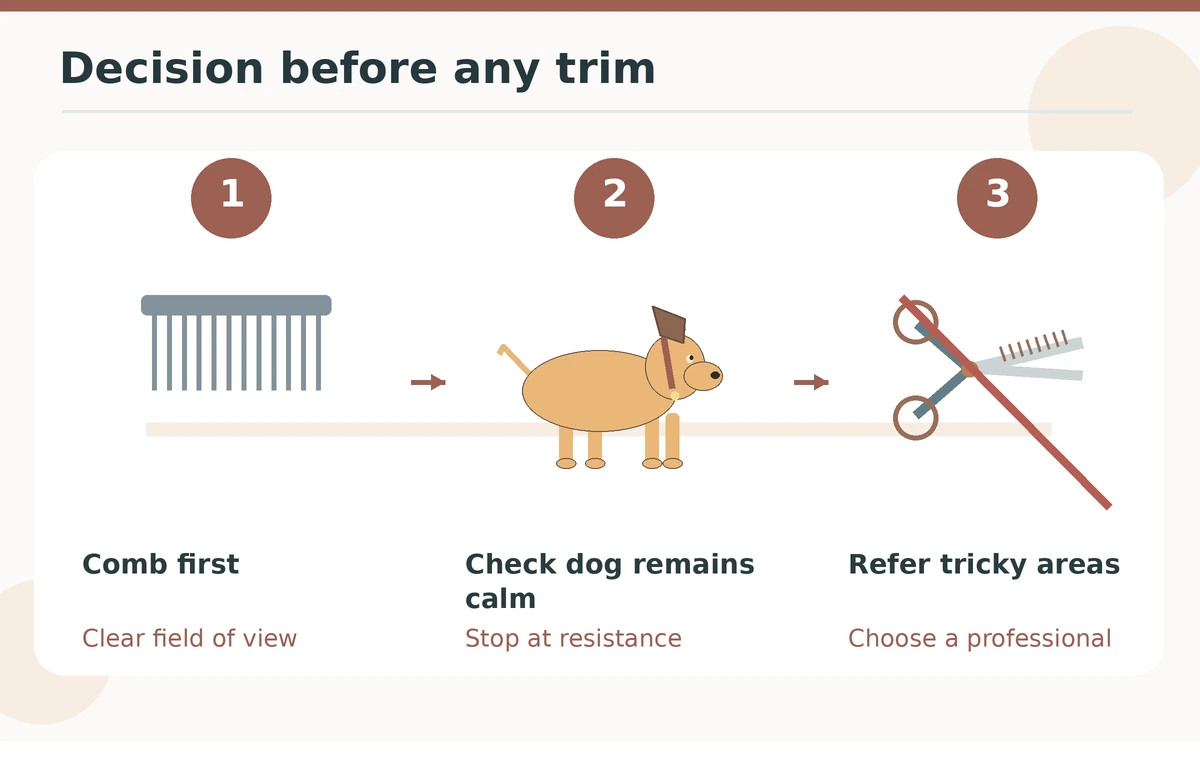
Before assuming long hair must be trimmed, ask whether the underlying problem is loose hair, a tangle, hygiene, or true coat length. Routine brushing removes surface debris without changing the coat’s structure. A comb reveals hidden tangles. A damp cloth handles many minor messes. In contrast, cutting changes how hair sits and grows back. Double-coated breeds have particular coat considerations, so discuss major length changes with a qualified groomer instead of cutting for cosmetic convenience.
Prepare a low-stress grooming appointment
Choose a groomer who can explain the intended trim and what happens if your dog becomes uncomfortable. Bring notes on skin irritation, prior grooming reactions, and any matting. Explain areas your dog dislikes having touched. Ask how the groomer will handle a dog that moves or needs a break. If you are considering doing any simple trimming at home later, request hands-on instruction and a demonstration with your particular dog rather than relying only on photos.
Maintain shears only if you actually use them
Store closed shears in a protective case, away from children and pets. Wipe and dry blades according to manufacturer instructions; moisture and accumulated hair interfere with smooth action. Do not adjust tension or attempt home sharpening without appropriate training. A blade that snags, bends, or closes unevenly needs professional servicing or replacement. Damaged shears should never be tested on an animal to see whether they still cut.
Recognize the stop conditions during grooming
Stop any grooming activity if the dog stiffens, tries to escape, cries, or turns sharply toward the tool. Pause when lighting is poor or you cannot clearly identify the skin boundary. A wound, inflamed patch, or sudden coat change calls for veterinary guidance before trimming. Never use restraint to force a haircut to completion. A shorter, uneventful grooming session has greater long-term value than finishing a cosmetic line against the dog’s signals.
Who should buy which tool?
Owners who mainly brush and keep a coat tidy may not need shears at all. A trained home groomer might use straight or blending shears only after instruction about their dog’s specific coat. Curved shears usually make more sense for people with practiced contour work. Whatever the design, evaluate control, cleaning, storage, and access to professional teaching. The buying decision should start with the job and the animal’s comfort, not the number of tools in a kit.
How We Research
We compared veterinary coat-care advice from VCA Animal Hospitals with practical grooming and handling guidance from the American Kennel Club and topic-specific safety recommendations. The review distinguishes coat types, mechanical tool design, and situations that require a professional rather than pretending we tested products. Our editors checked the cited guidance on October 27, 2026. Read more about our editorial approach on the About HubPet page.
Sources
VCA Animal Hospitals: Grooming and Coat Care for Your Dog: Read the original guidance. Accessed October 27, 2026.
PetMD: How To Handle Matting in Dogs and Cats: Read the original guidance. Accessed October 27, 2026.
American Kennel Club: Dog Grooming at Home: Read the original guidance. Accessed October 27, 2026.
No tip shape makes moving, delicate areas risk-free. Leave trimming near eyes and ears to a trained groomer, particularly if the dog moves.
Straight shears make linear cutting paths; curved blades shape contours in trained hands. Neither design is inherently safe for close-to-skin trimming.
No. Thinning teeth can catch skin hidden inside a mat. Tight mat removal belongs with a professional using an appropriate method.
No. Many owners only need a coat-appropriate brush and comb between professional appointments. Shears are optional cutting tools.
Stop if the dog moves repeatedly, the skin edge is unclear, you see irritation, or hair is matted. A groomer or veterinarian can assess the risk.