
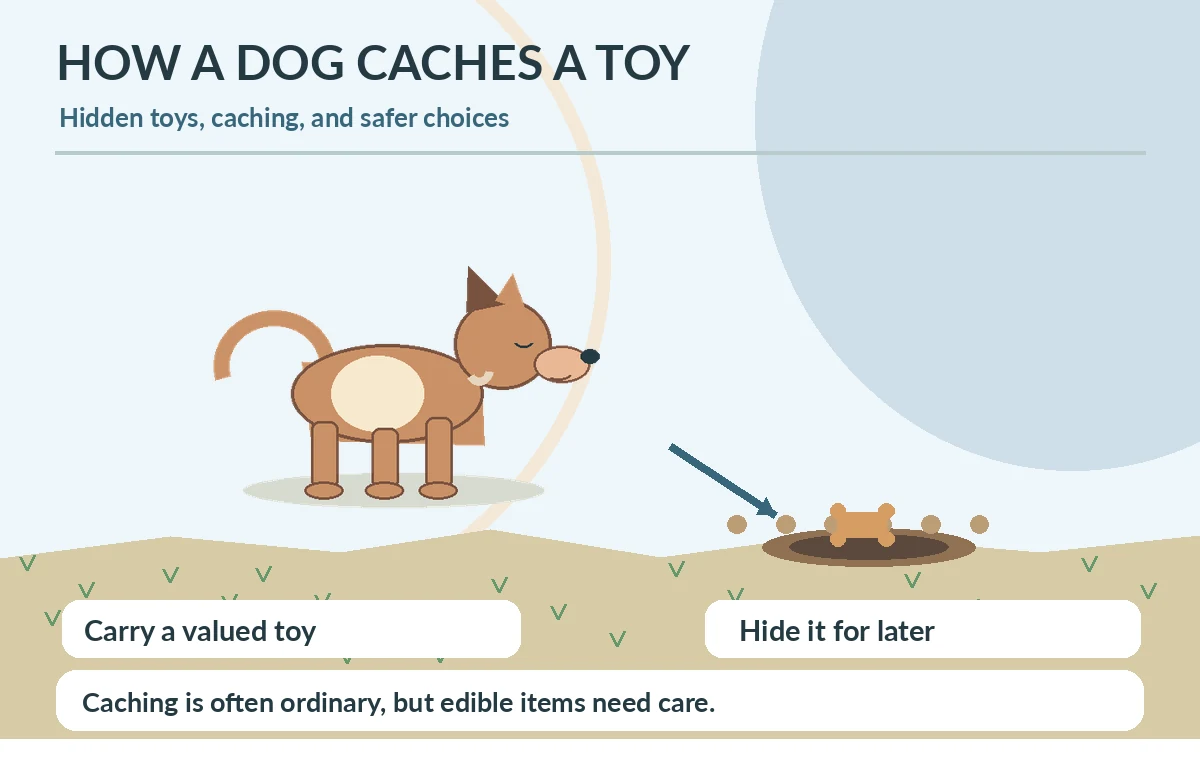
A dog carries a toy into the yard, scratches a shallow hole, drops the object in, and uses its nose to move soil back over it. Another hides a chew beneath a couch cushion. Both may be examples of caching: placing valued items somewhere to retrieve later. This behavior has an evolutionary story, but it is also shaped by individual learning and the household environment. Burying is not automatically hoarding caused by poor feeding, and it is not proof your dog is misbehaving. The practical questions are what is hidden, where, and whether another pet or person might encounter it.
What caching actually looks like
A dog may relocate a bone, push it into a soft surface, paw over it, and walk away. Some return promptly; others forget or abandon the stash. AKC’s explanation of hiding behavior describes an instinct to protect or save prized objects. Notice whether the dog is relaxed during the sequence or seems tense when others approach. The action can be normal even in a well-fed pet, and many dogs never do it at all. The goal of observation is to tell a harmless habit from a safety concern, not to claim that every dog is storing food for a lean winter.
Why a sofa cushion becomes a hiding place
Loose blankets, soft cushions, garden soil, and piles of leaves all allow a dog to move or cover an item. Indoors, pawing a blanket can resemble digging even when there is no soil. Check favorite hiding spots before sitting down or running a vacuum; small objects and chews can become dangerous if overlooked. Do not yank objects from the dog’s mouth or chase it around the room. Pursuit can turn a stash into an exciting keep-away game. Offer a fair, positive toy exchange instead and prevent access to places that are hard to inspect.
Distinguish caching from bored digging
Caching has an object-centered sequence: carrying an item, making or choosing a hiding place, and depositing it. Recreational digging may involve repeated holes with no object. Digging along a fence can have escape motivations, while cooling or denning creates yet another pattern. AKC notes these distinct reasons for digging, so choose a response matched to what you observe. If a dog hides one toy each evening, give a safe location and remove risky objects. If holes appear along a fence, focus on yard security rather than treating every hole as food storage.
Avoid unsafe buried edible chews
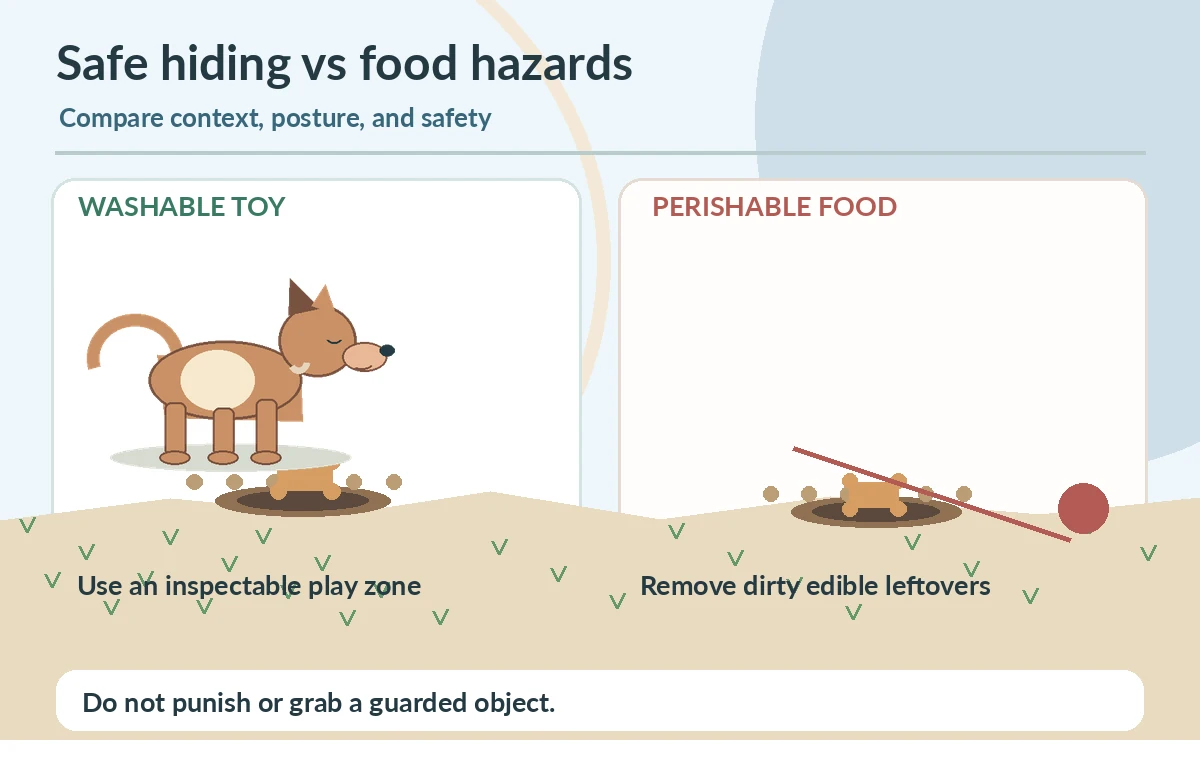
Edible items left in damp soil may collect dirt or spoil; hard chew pieces can also become choking or digestive hazards. Do not encourage dogs to bury raw meat, bones, or other perishable foods for later consumption. Retrieve hidden edible pieces when you can do so without a confrontation, and use a planned exchange if the dog is guarding the object. Discard contaminated or deteriorated items rather than washing and re-offering them. Choose chew products appropriate for the dog and supervise use. Ask your veterinarian about individual dental or digestive safety instead of assuming any bone is universally safe.
Create an approved digging and hiding zone
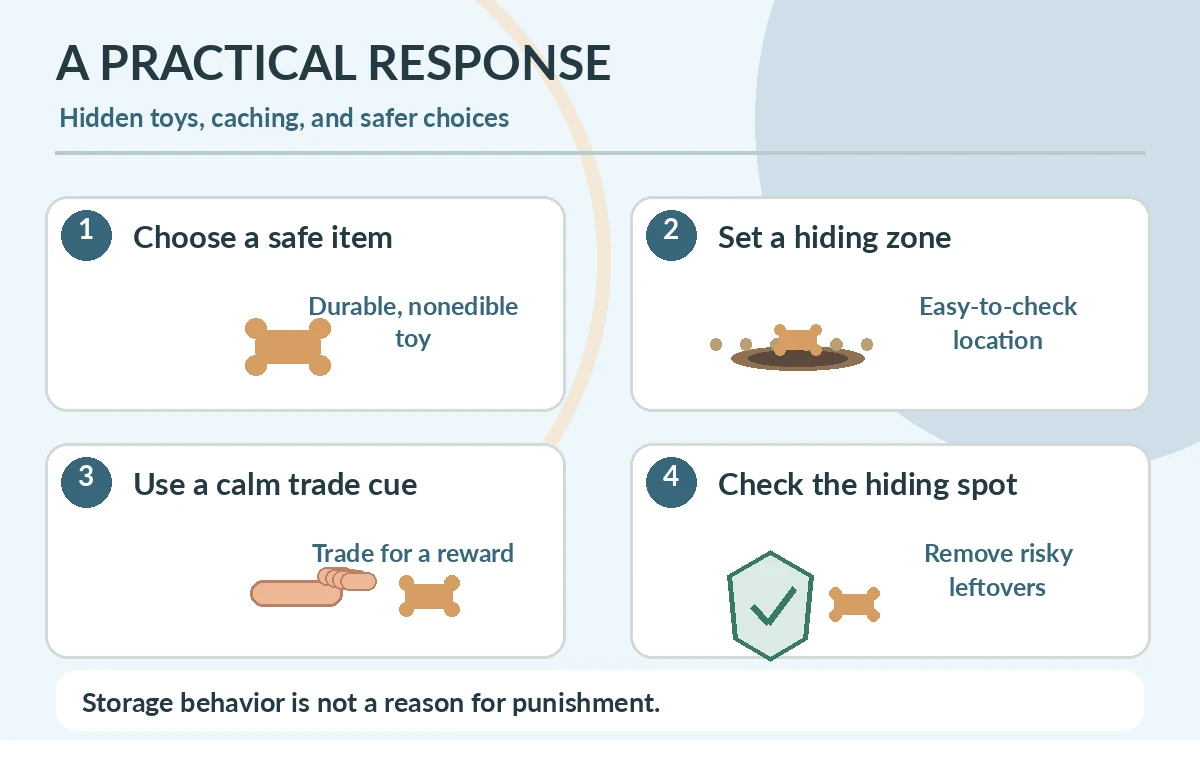
If your dog enjoys the routine, provide a contained soil or sand area where you control the contents and regularly check for debris. Start by placing a durable, washable nonedible toy where the dog can easily uncover it. Invite searching and praise success, rather than burying a sharp chew or deep object. Keep garden chemicals and toxic plants out of reach. For apartment dogs, hide a suitable toy beneath a light blanket while supervised; avoid fabric a dog might swallow. Enrichment works best when it respects a dog’s preferences and is easy for you to inspect.
Teach an exchange instead of confiscation
Practice with a low-value toy. Say a consistent cue such as “trade,” offer a reward, and allow the dog to choose to release. After the exchange, sometimes return the safe toy so the cue does not always predict permanent loss. Build the habit before you need to remove a muddy bone. Do not reach into a tense dog’s mouth, corner it in the yard, or punish guarding. AVSAB recommends reward-based teaching, and ASPCA bite-prevention guidance emphasizes giving dogs space around valued items. Serious resource guarding deserves individual help from a qualified professional.
Keep the yard and household safe
Check shallow holes for exposed roots, sprinkler lines, buried glass, and unstable edges. Supervise dogs near fencing, and fill large hazards after safely moving the dog. Store shoes, medication packages, batteries, and children’s small toys where they cannot become stashes. If several pets live together, provide separate resting and chewing areas to reduce competition. Pick up leftover edible chews after the session. A tidy, inspectable environment is often more successful than repeatedly telling a dog to stop doing something it finds natural and rewarding.
When the pattern changes abruptly
Occasional toy caching rarely requires intervention, but a sudden frantic fixation on hiding food, refusal to eat, new aggression near objects, or digging paired with distress calls for attention. Track recent changes in routine, appetite, access to chew items, and interactions with other animals. A veterinarian can evaluate potential medical contributors; a qualified reward-based behavior consultant can assist with guarding or repetitive behavior. Avoid using the old dominance myth to explain all possessiveness. Your immediate priorities are safe management and preventing bites while seeking appropriate advice.
How We Research
We examine primary veterinary or recognized animal-welfare guidance, compare it with practical behavior observations, and separate supported claims from plausible but uncertain explanations. We avoid treating isolated gestures as diagnoses and prioritize voluntary interaction, reward-based education, and clear veterinary escalation signs. This guide was reviewed against the linked resources on October 27, 2026; it does not replace individual clinical or behavior advice. Learn about our standards on About HubPet.
Sources
American Kennel Club, Why Does My Dog Hide Things?: Read source. Accessed October 27, 2026.
American Kennel Club, Why Does My Dog Dig?: Read source. Accessed October 27, 2026.
American Veterinary Society of Animal Behavior, Humane Dog Training: Read source. Accessed October 27, 2026.
ASPCA, Dog Bite Prevention: Read source. Accessed October 27, 2026.
Safety note: Sudden behavior changes, pain, distress, breathing difficulty, or bites call for individualized veterinary or professional help. See our veterinary disclaimer.
Caching can be a normal way of saving a valued item and is not evidence that food is inadequate. Individual dogs vary in the habit.
Soft household materials are easy to push over items. Provide safe designated spots and remove small or damaged objects from hiding places.
A supervised, safe digging zone can work for some dogs. Use clean, nonedible toys and inspect the area for sharp objects or escape risks.
Do not re-offer contaminated or spoiled edible items. Buried bones can become dirty and may carry choking or other hazards.
Give space and do not forcibly take it away. Use management, safe exchanges when appropriate, and help from a qualified professional.